Six of Swords
"Transition, change, rite of passage, releasing baggage."
Quick Overview
Upright Meaning
General Interpretation
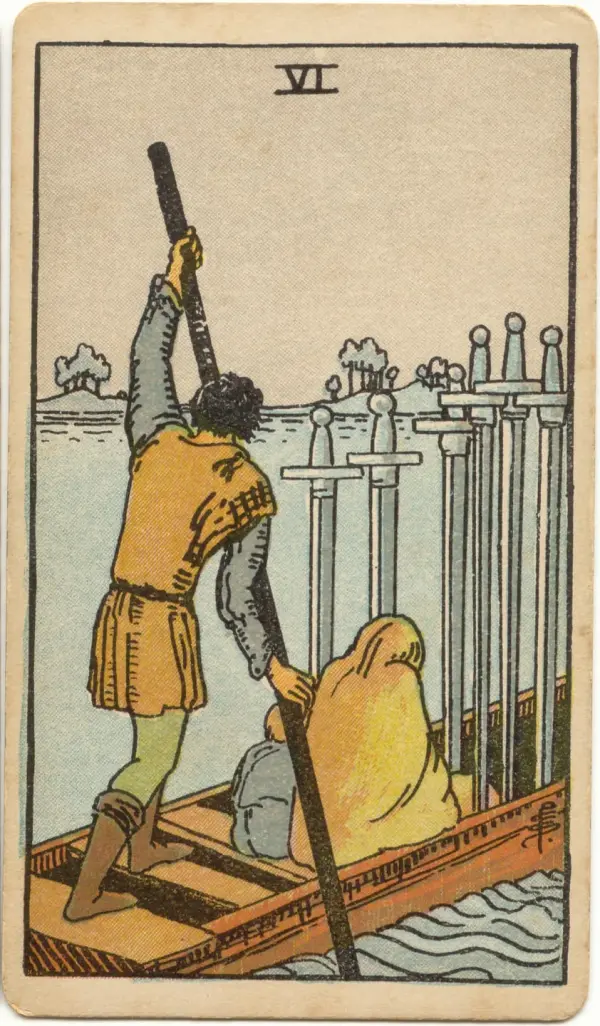
The Six of Swords upright indicates a period of transition — you are moving away from difficulty, conflict, or pain and heading toward a calmer, more stable situation. This is not a sudden dramatic change but a gradual, often somber journey. You may be leaving a toxic relationship, a stressful job, a painful chapter of your life, or simply a mindset that no longer serves you. The six swords in the boat represent the thoughts, memories, and mental baggage you carry with you — you cannot leave everything behind, but you can carry it toward a place where it weighs less heavily. The Six of Swords does not promise that the journey will be easy or that the destination will be paradise, but it does promise that you are moving in the right direction. Sometimes the bravest thing you can do is simply get in the boat and leave.
Love & Relationships
In love, the Six of Swords often indicates a relationship in transition — moving away from a turbulent period toward something calmer and more stable. For couples, this can mean leaving behind a difficult phase — recovering from a fight, healing after a betrayal, or transitioning through a major life change together. The journey is not yet complete, but you are headed in the right direction. For some, the Six of Swords more literally indicates leaving a relationship — walking away from a partner, a dynamic, or a situation that has become too painful to sustain. This is a card of necessary departures, not impulsive ones. For singles, the Six of Swords suggests you are in the process of moving on from past heartbreak and gradually opening yourself to the possibility of new love, even if you are not quite there yet.
Career & Work
In career readings, the Six of Swords represents professional transition — moving away from a stressful or unfulfilling work situation toward something better. This can manifest as changing jobs, transferring departments, shifting career paths, or simply adopting a new mental approach to your professional life. The transition may feel uncomfortable or uncertain — you may not yet see the full picture of where you are heading — but the Six of Swords assures you that the direction is positive. This card can also represent actual travel for work, relocation, or commuting to a new workplace. If you have been enduring a toxic work environment, the Six of Swords affirms that your decision to leave is the right one, even if the next step is not yet clear.
Finance & Money
Financially, the Six of Swords suggests a gradual improvement in your financial situation — moving away from instability, debt, or financial stress toward more manageable circumstances. This is not a windfall card; the progress is slow and steady. You may be implementing a debt repayment plan, downsizing expenses, or transitioning to a more financially stable lifestyle. The six swords in the boat remind you that some financial burdens will travel with you — debts, obligations, responsibilities — but you are carrying them toward a situation where they are easier to manage. If you are considering a financial move such as relocation, the Six of Swords supports the transition as ultimately beneficial.
Health & Spirituality
Health-wise, the Six of Swords is a gentle card of recovery and healing. If you have been dealing with illness, injury, or mental health challenges, this card indicates that you are moving through the healing process — not yet fully recovered, but clearly heading in the right direction. The rough waters behind you represent the acute phase of illness or distress; the calm waters ahead represent the stability and peace that recovery brings. The Six of Swords is particularly associated with mental health transitions — seeking therapy, beginning medication, leaving an environment that was damaging your well-being, or simply adopting a calmer, healthier mindset. The journey may be slow, but the movement toward healing is real and sustained.
Reversed Meaning
General Interpretation
The Six of Swords reversed indicates resistance to a necessary transition, an inability to move on, or a journey that has been delayed or disrupted. You may know intellectually that you need to leave a painful situation behind, but emotionally you cannot bring yourself to get in the boat. Fear of the unknown, attachment to the familiar — even when the familiar is painful — or unfinished business may be keeping you stuck in turbulent waters. Alternatively, the reversed Six can indicate an attempted transition that has been blocked or reversed — returning to a situation you thought you had left, or finding that the calmer waters you were heading toward have turned out to be just as troubled. This reversal asks you to examine what is keeping you anchored to suffering and whether you are ready to truly let go.
Love & Relationships
In love, the Six of Swords reversed often indicates being stuck in a painful relationship dynamic — knowing you should leave but feeling unable to do so, or physically leaving but emotionally remaining tethered to the past. You may keep returning to an ex, replaying old arguments in your mind, or carrying the wounds of a past relationship so heavily that they prevent you from moving forward. For couples, this reversal can indicate a relationship that has tried to transition through difficulty but keeps getting pulled back into old patterns — the same fights recurring, the same wounds reopening. The reversed Six asks whether you are truly moving on or merely going through the motions while your heart remains stuck in the past.
Career & Work
Reversed in career readings, the Six of Swords suggests a professional transition that is stalled or resisted. You may want to leave your current job but feel trapped by financial obligations, fear, or inertia. Alternatively, you may have attempted a career change that did not work out, forcing you to return to a situation you thought you had left behind. This reversal can also indicate difficulty adapting to a new work environment — the transition has happened physically but you have not yet adjusted mentally or emotionally. The reversed Six encourages patience with yourself during professional transitions and honest examination of what is truly holding you back from moving to calmer professional waters.
Finance & Money
Financially reversed, the Six of Swords indicates a financial transition that is stalled or moving backward. Debt repayment plans may have been disrupted, financial improvements may have reversed, or you may find yourself returning to financial instability after a period of progress. This reversal can also indicate the financial cost of refusing to make a necessary change — staying in an expensive living situation, clinging to a failing business, or avoiding financial decisions that would ultimately improve your situation. The reversed Six urges you to honestly assess what is preventing your financial journey toward stability and whether the cost of staying put exceeds the discomfort of moving on.
Health & Spirituality
Health-wise, the Six of Swords reversed can indicate a healing process that has stalled or reversed — a relapse, a setback in recovery, or the return of symptoms you thought had resolved. This reversal may also suggest resistance to the changes necessary for healing — refusing to follow medical advice, abandoning a treatment plan prematurely, or returning to habits and environments that are harmful to your well-being. The reversed Six of Swords is a compassionate but firm reminder that healing requires forward movement: you must be willing to leave behind what is making you unwell, even when that departure is frightening or painful. Recovery is a journey, and the boat can only take you to calmer waters if you stay in it.
Symbolism & Imagery
A flat-bottomed boat glides across a body of water, carrying three figures toward the distant shore. In the bow, six swords stand upright, their blades piercing through the wooden hull into the water below — the most striking and symbolic detail of the card. These swords represent the thoughts, memories, grief, and mental burdens that the passengers carry with them on their journey. They cannot be left behind entirely; they are literally embedded in the vessel that carries the travelers forward, suggesting that we always bring some pain with us when we move on. A cloaked figure — likely a woman — sits hunched and covered in the center of the boat, her posture heavy with grief or exhaustion. Beside her, a small child huddles close, representing innocence, vulnerability, and the future that makes the difficult journey worthwhile. Standing at the stern, a boatman poles the vessel forward with steady, purposeful strokes — a guide, a ferryman, a figure of practical help who navigates the passage from one state to another. The water tells the card's central story: on the right side of the boat, nearest the shore they are leaving, the water is choppy, turbulent, and disturbed. On the left side, ahead of them, the water is smooth, calm, and still. This visual transition from rough to calm is the essence of the Six of Swords — the movement from difficulty to peace, from pain to healing, from what was to what will be. The distant shore is visible but indistinct, suggesting that the destination offers stability without certainty — you know you are heading somewhere better, even if you cannot yet see exactly what awaits.
Questions to Ask Yourself
- "What painful situation do I need to leave behind, and what is preventing me from beginning that journey?"
- "Am I carrying mental baggage from the past that is weighing down my progress — and can I begin to lighten that load?"
- "Can I trust that moving toward the unknown is better than remaining in a painful situation simply because it is familiar?"
Action Steps
- → Identify one situation in your life — a relationship, a habit, a mindset, a place — that you know you need to leave behind, and take the first concrete step toward that departure, however small.
- → Write a letter to your past self or to the situation you are leaving — acknowledge the pain, honor what you learned, and deliberately choose to turn toward calmer waters.
- → Seek out a guide or support for your transition — a therapist, a mentor, a trusted friend — someone who can help you navigate the passage from where you are to where you need to be.
Affirmations
- ✨ I give myself permission to leave behind what has caused me pain, and I trust the journey toward calmer waters.
- ✨ Moving on does not mean forgetting — it means choosing to carry my experiences forward as wisdom rather than as wounds.
- ✨ I am not running away — I am moving toward a life that deserves my energy, my peace, and my hope.
Card Combinations
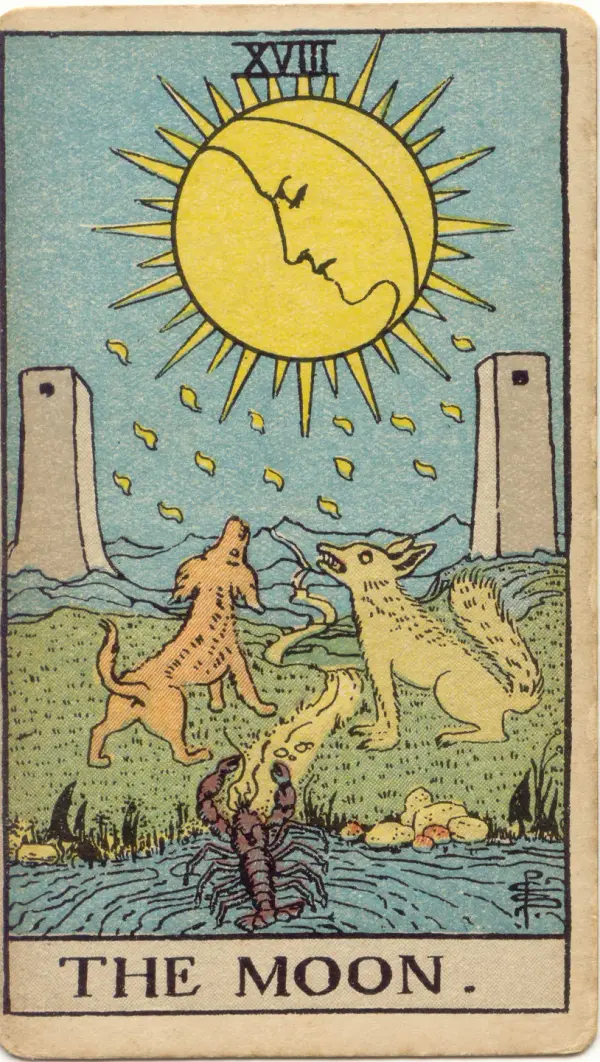
+ The Moon
With The Moon: A journey through emotional uncertainty and hidden fears. The transition of the Six is complicated by the Moon's illusions and anxieties — the path forward is unclear, and what you are leaving behind may not be fully understood. Trust the direction of travel even when you cannot see the destination clearly.
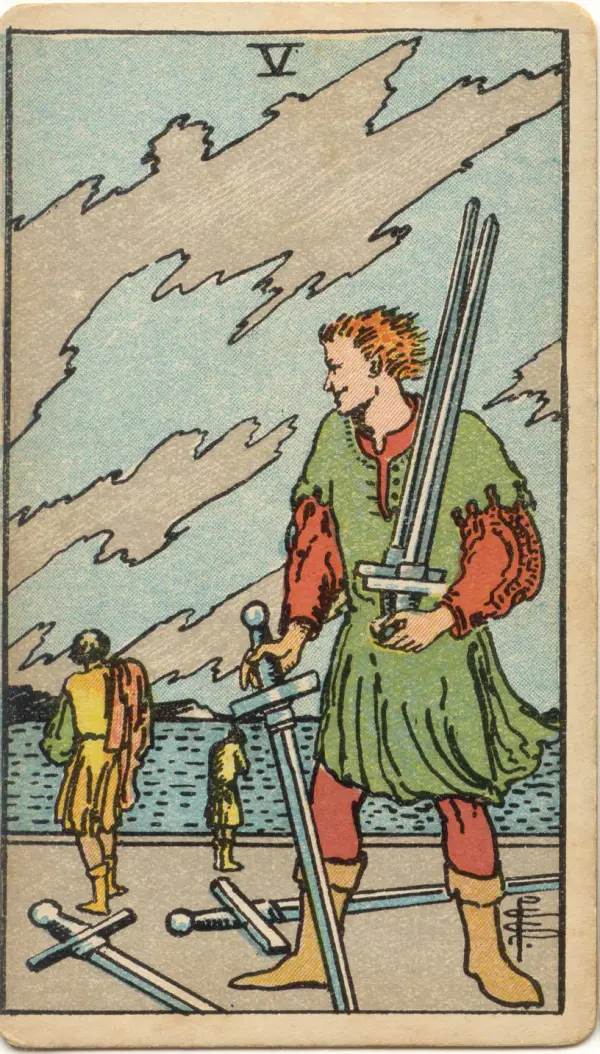
+ Five of Swords
With the Five of Swords: The decision to walk away from conflict rather than continue fighting. This pairing strongly advises choosing peace over victory — leave the battlefield behind and move toward calmer waters, even if it means conceding the argument.
+ The Star
With The Star: A beautiful pairing of transition and hope. The difficult journey of the Six of Swords leads directly to the Star's healing light. After leaving behind what has caused you pain, you will find genuine renewal, peace, and a restored sense of faith in the future.