Five of Swords
"Conflict, tension, loss, defeat, win at all costs."
Quick Overview
Upright Meaning
General Interpretation
The Five of Swords upright signals conflict, tension, and the bitter aftermath of a disagreement where no one truly wins. You may be involved in or witnessing a situation where someone is pursuing victory at all costs — using manipulation, aggression, or deception to come out on top, regardless of the damage to others. This card warns that winning through intimidation, dishonesty, or brute force creates enemies and erodes trust. Even if you prevail in the short term, the long-term consequences — isolation, resentment, damaged reputation — will far outweigh the satisfaction of being right. The Five of Swords asks you to examine your role in current conflicts honestly: are you the aggressor, the victim, or the bystander? And more importantly, is this a battle worth fighting at all?
Love & Relationships
In love, the Five of Swords is a deeply challenging card that indicates conflict, power struggles, or a toxic dynamic within a relationship. Arguments have escalated beyond productive disagreement into territory where words are used as weapons and one or both partners are more interested in winning than in understanding. This card can indicate verbal cruelty, emotional manipulation, or a relationship where one partner consistently dominates and diminishes the other. For couples, the Five of Swords is a serious warning: if the pattern of hostile conflict continues, the relationship will suffer irreparable damage. For singles, this card may represent lingering bitterness from past relationships that is poisoning your approach to new ones, or an attraction to people who engage in power games rather than genuine connection.
Career & Work
In career readings, the Five of Swords indicates workplace conflict, office politics, or professional rivalries that have turned ugly. Someone may be taking credit for your work, undermining your position, or engaging in cutthroat competition that sacrifices team cohesion for individual gain. This card can also indicate being on the losing side of a professional dispute — a project rejected, a promotion given to someone else, or being outmaneuvered by a more aggressive colleague. The Five of Swords advises you to pick your professional battles very carefully. Not every slight requires a response, and engaging in every workplace conflict will drain your energy and damage your reputation. Sometimes the wisest move is to walk away and redirect your energy toward something more constructive.
Finance & Money
Financially, the Five of Swords warns of losses through conflict — legal disputes that drain resources, business partnerships that end badly, or financial dealings where someone acts in bad faith. You may be tempted to pursue a financial fight on principle, even when the cost of winning exceeds the value of what you are fighting for. This card also warns against financial dishonesty — cutting corners, exploiting others, or engaging in ethically questionable financial practices that may produce short-term gains but long-term consequences. The Five of Swords advises honest self-assessment: is this financial conflict truly necessary, or is ego driving the fight?
Health & Spirituality
Health-wise, the Five of Swords points to the physical toll of chronic conflict and stress. Constant tension, hostility, and the mental exhaustion of ongoing disputes directly impact your health through elevated cortisol, disrupted sleep, weakened immunity, and stress-related conditions such as headaches, digestive issues, or high blood pressure. This card may also indicate health situations involving conflict — disagreements with healthcare providers, disputes over treatment approaches, or the stress of advocating for yourself within a medical system. The Five of Swords strongly urges you to consider whether the conflicts in your life are worth the physical price your body is paying.
Reversed Meaning
General Interpretation
The Five of Swords reversed signals the end of conflict and the beginning of reconciliation — or at least the desire for it. After a period of hostility and tension, you are starting to realize that winning is not worth the cost, and you are ready to lay down your weapons, acknowledge the damage done, and seek a path toward peace. This reversal often indicates the aftermath of a fight where both parties are exhausted and ready to move on. It can represent genuine reconciliation — apologies offered, forgiveness extended, and relationships beginning to heal. However, the reversed Five can also indicate lingering resentment, an unresolved conflict that continues to simmer beneath the surface, or the shame and regret that comes from realizing you went too far in a disagreement. The key question is whether you are truly ready to let go or merely suppressing the conflict until it erupts again.
Love & Relationships
In love, the Five of Swords reversed is often a hopeful sign of reconciliation after conflict. The fighting is winding down, harsh words are being replaced by attempts at understanding, and both partners are recognizing the futility of trying to win against someone they love. This reversal can indicate a genuine turning point — the moment when a couple decides that their relationship matters more than being right. Apologies may be offered, boundaries may be established, and a new foundation of mutual respect may begin to form. However, the reversed Five can also indicate a cycle of conflict and reconciliation that never truly resolves — fighting, making up, and fighting again without addressing the underlying issues. For some, this reversal confirms that it is time to walk away from a toxic relationship with as much grace as possible.
Career & Work
Reversed in career readings, the Five of Swords indicates the resolution of workplace conflict — a dispute settling, tensions easing, or a toxic colleague departing. You may be choosing to disengage from office politics and focus on your own work rather than getting drawn into professional rivalries. This reversal can also represent learning from a professional defeat — accepting a loss gracefully, extracting the lesson, and moving forward without bitterness. On the negative side, the reversed Five can indicate unresolved workplace tensions that continue to undermine productivity and morale, or the temptation to retaliate against someone who wronged you professionally. The wisest path forward is almost always to release the grievance and redirect your energy.
Finance & Money
Financially reversed, the Five of Swords suggests the resolution of financial disputes — settlements reached, debts forgiven, or the decision to stop throwing good money after bad in a losing financial battle. You may be accepting a financial loss and choosing to move on rather than continuing to fight for money that is costing you more in stress and legal fees than it is worth. This reversal can also indicate financial reconciliation — renegotiating terms, finding a compromise, or restoring a financial partnership that was damaged by conflict. The reversed Five advises pragmatism over pride: sometimes accepting a smaller outcome peacefully is wiser than fighting for a larger one destructively.
Health & Spirituality
Health-wise, the Five of Swords reversed indicates recovery from stress-related health issues as conflicts in your life begin to resolve. As the tension decreases, your body can finally begin to heal — cortisol levels normalize, sleep improves, and the physical symptoms of chronic stress begin to fade. This reversal can also indicate making peace with a health situation you have been fighting against — accepting a diagnosis, adjusting to new limitations, or releasing the anger and frustration that accompanies chronic illness. The reversed Five of Swords reminds you that sometimes healing requires surrender rather than combat — working with your body rather than fighting against it.
Symbolism & Imagery
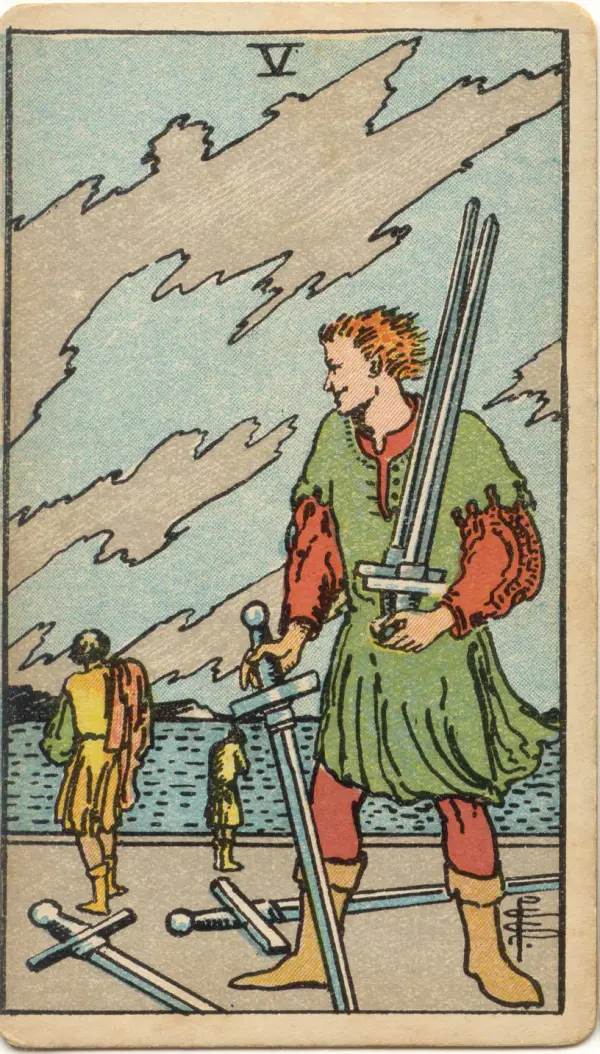
A man stands in the foreground clutching three swords to his chest with an expression of cold satisfaction — he has won, but his victory is hollow and isolating. His smirk suggests not noble triumph but petty dominance, the pleasure of having bested others through cunning or aggression rather than merit. Behind him, two figures walk away: one covers his face in grief or shame, the other hunches forward in defeat, their body language radiating dejection and humiliation. Two discarded swords lie on the ground between the victor and the defeated — weapons that were dropped in surrender or knocked from their owners' hands, representing ideas, arguments, or positions that have been abandoned. The sky above is the card's most telling detail: torn, windswept clouds stretch across a grey-green expanse in jagged, turbulent patterns. The storm has technically passed, but the sky remains unsettled and ominous, suggesting that the aftermath of this conflict will linger long after the fighting has stopped. The water in the background — still and grey — reflects the emotional deadness that follows destructive conflict. The overall scene is bleak and uncomfortable by design: the Five of Swords refuses to glorify victory, instead showing the true cost of winning when winning comes at the expense of others.
Questions to Ask Yourself
- "Am I fighting this battle because it truly matters, or because my ego will not allow me to walk away?"
- "What would I gain by winning this conflict — and is it worth what I would lose in relationships, peace, or integrity?"
- "Is there a way to resolve this situation that does not require a winner and a loser?"
Action Steps
- → Identify a conflict in your life where you have been fighting to win, and honestly assess whether the fight is worth the cost. If it is not, begin the process of disengaging with as much grace as possible.
- → If you have hurt someone in a recent conflict — even if you believe you were right — offer a genuine acknowledgment of the harm caused. Being right and being kind are not mutually exclusive.
- → Practice the art of strategic retreat: choose one battle you are currently fighting and consciously decide to walk away, redirecting that energy toward something constructive and life-giving.
Affirmations
- ✨ I choose my battles wisely, knowing that not every conflict deserves my energy or my peace of mind.
- ✨ True strength is not winning every argument — it is knowing which arguments are not worth having.
- ✨ I release the need to be right at all costs, and I choose connection, integrity, and peace over hollow victory.
Card Combinations
+ Justice
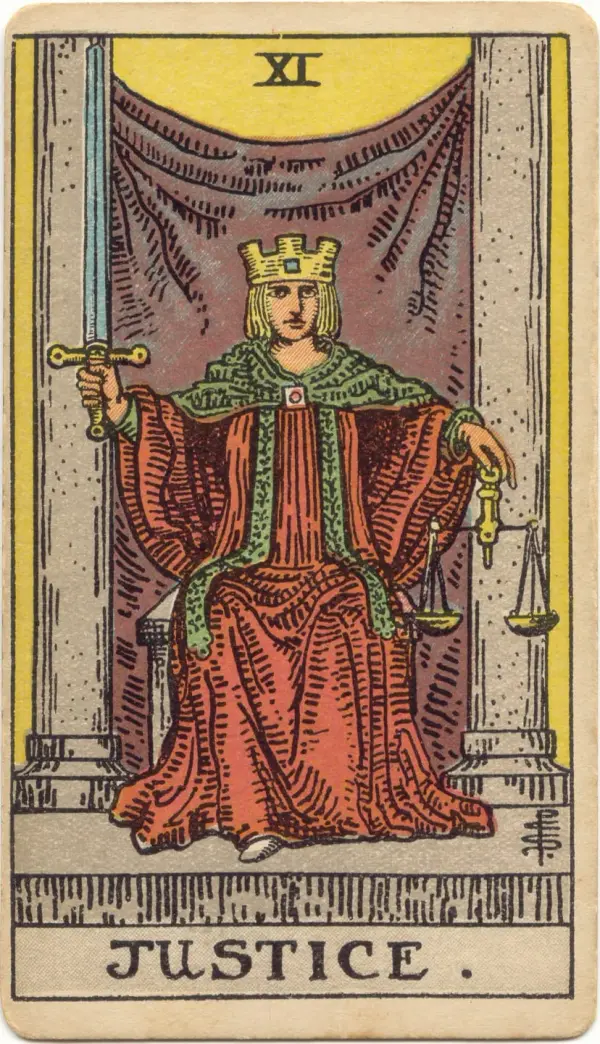
With Justice: Accountability for how the conflict was handled. This pairing suggests that the outcome of the dispute will ultimately be fair — those who fought dirty will face consequences, and the truth of who was right and who was wrong will become clear.
+ The Tower
With The Tower: A catastrophic escalation of conflict that destroys existing structures. The Five's hostility combines with the Tower's sudden upheaval to create a dramatic, irreversible breakdown — a relationship, partnership, or situation that collapses entirely under the weight of unresolved tension.
+ Six of Swords
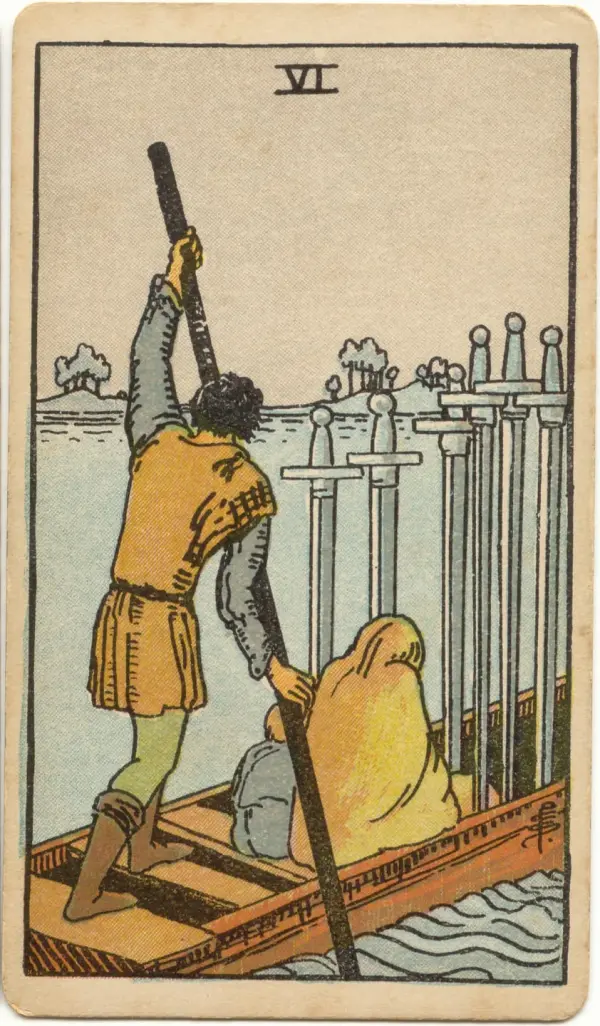
With the Six of Swords: The decision to walk away from the conflict and move toward calmer waters. This powerful pairing suggests that the best response to the Five's destructive energy is not to fight harder but to leave — to choose peace over victory and transition to a healthier situation.